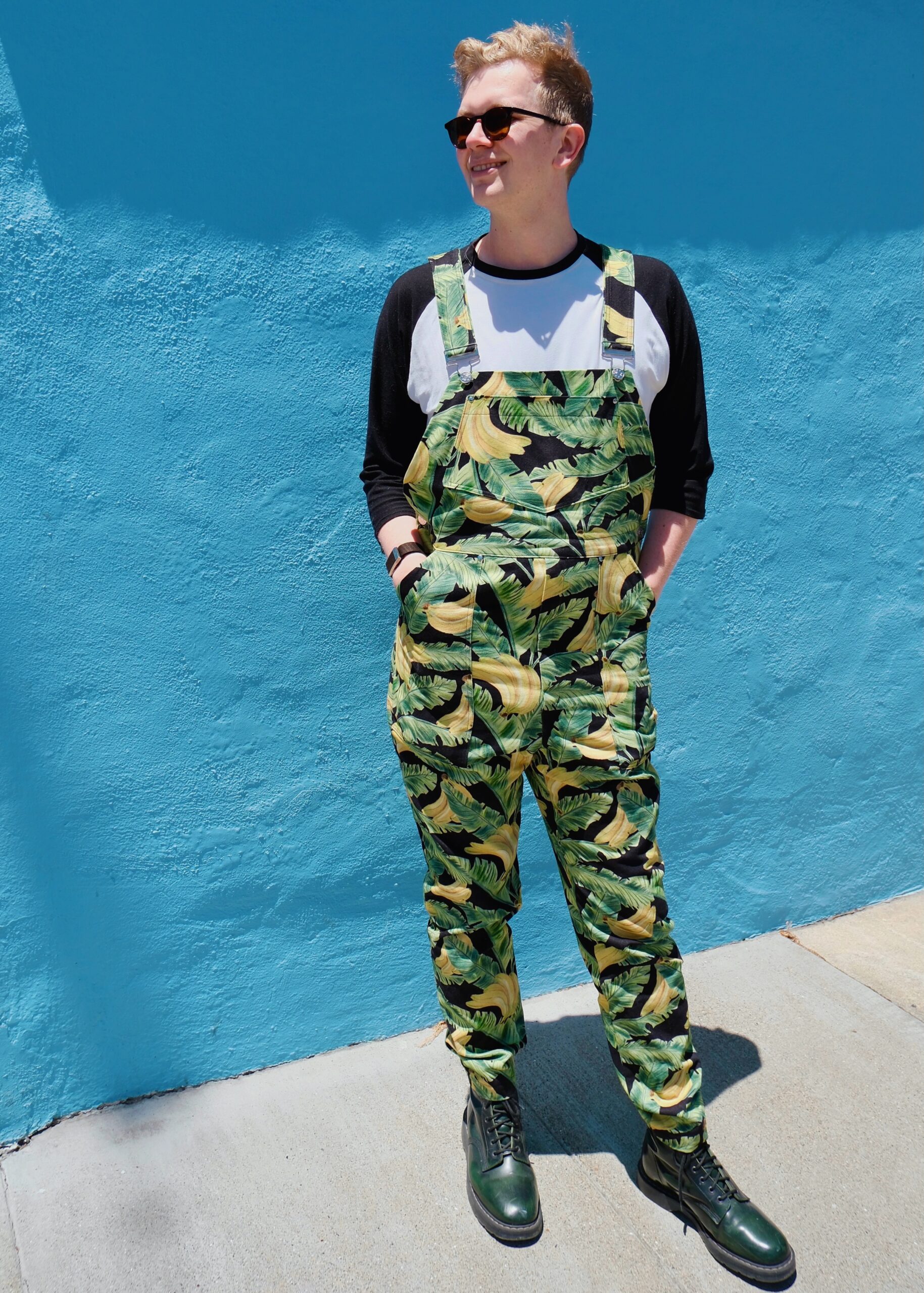
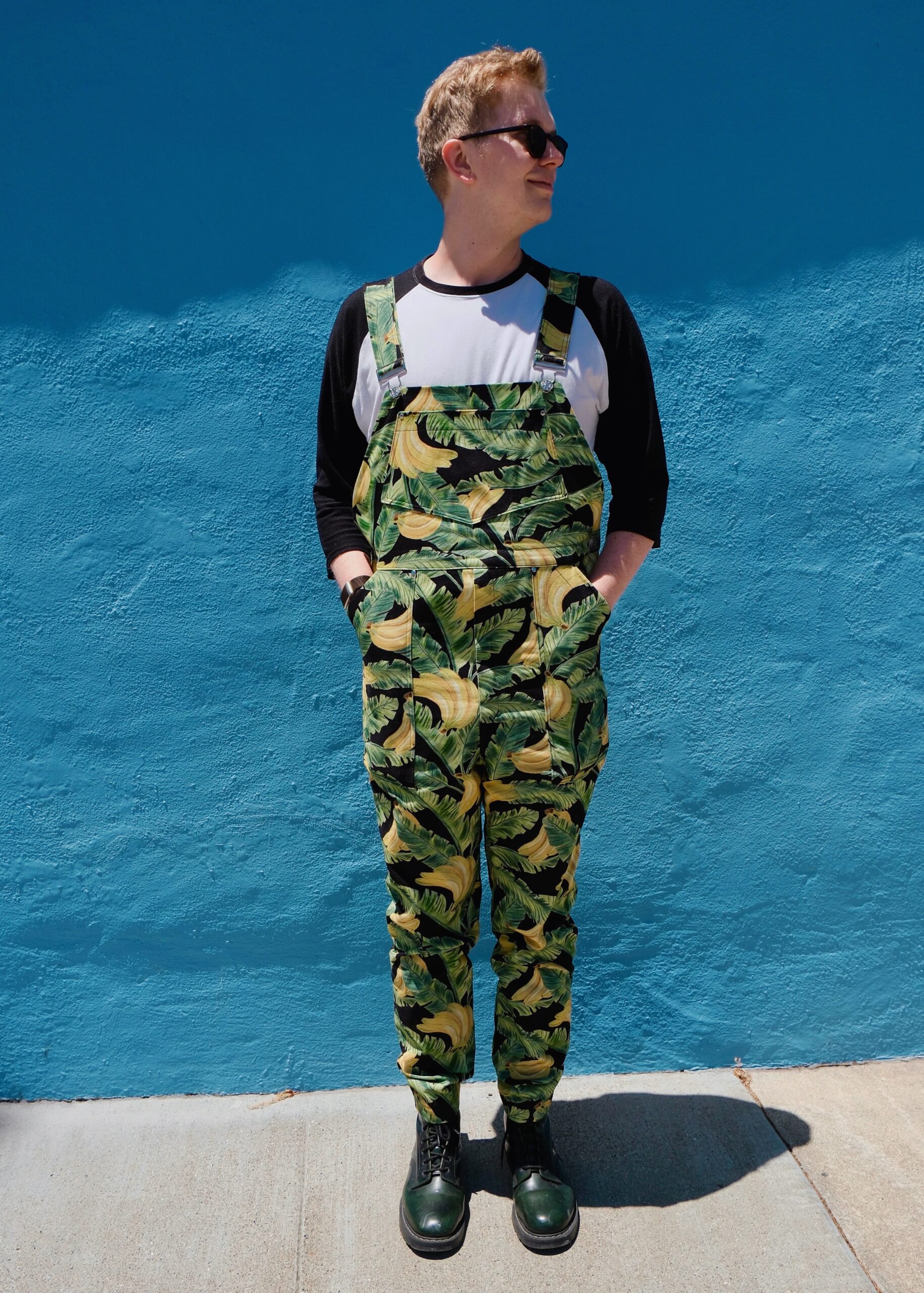
One of my Make Nine 2026 plans included a pair of banana-print denim dungarees for Simon. I had shown him this cotton denim from Fabric Godmother during a sale last year and he immediately asked if I would make him a pair of dungarees. If I had a nickel for every time I have sewn a banana-print garment for Simon, etc.! There isn’t a huge selection of classic-looking dungaree patterns out there for men, so we opted for Simplicity 8615, which is a reprint of a 1970s pattern.
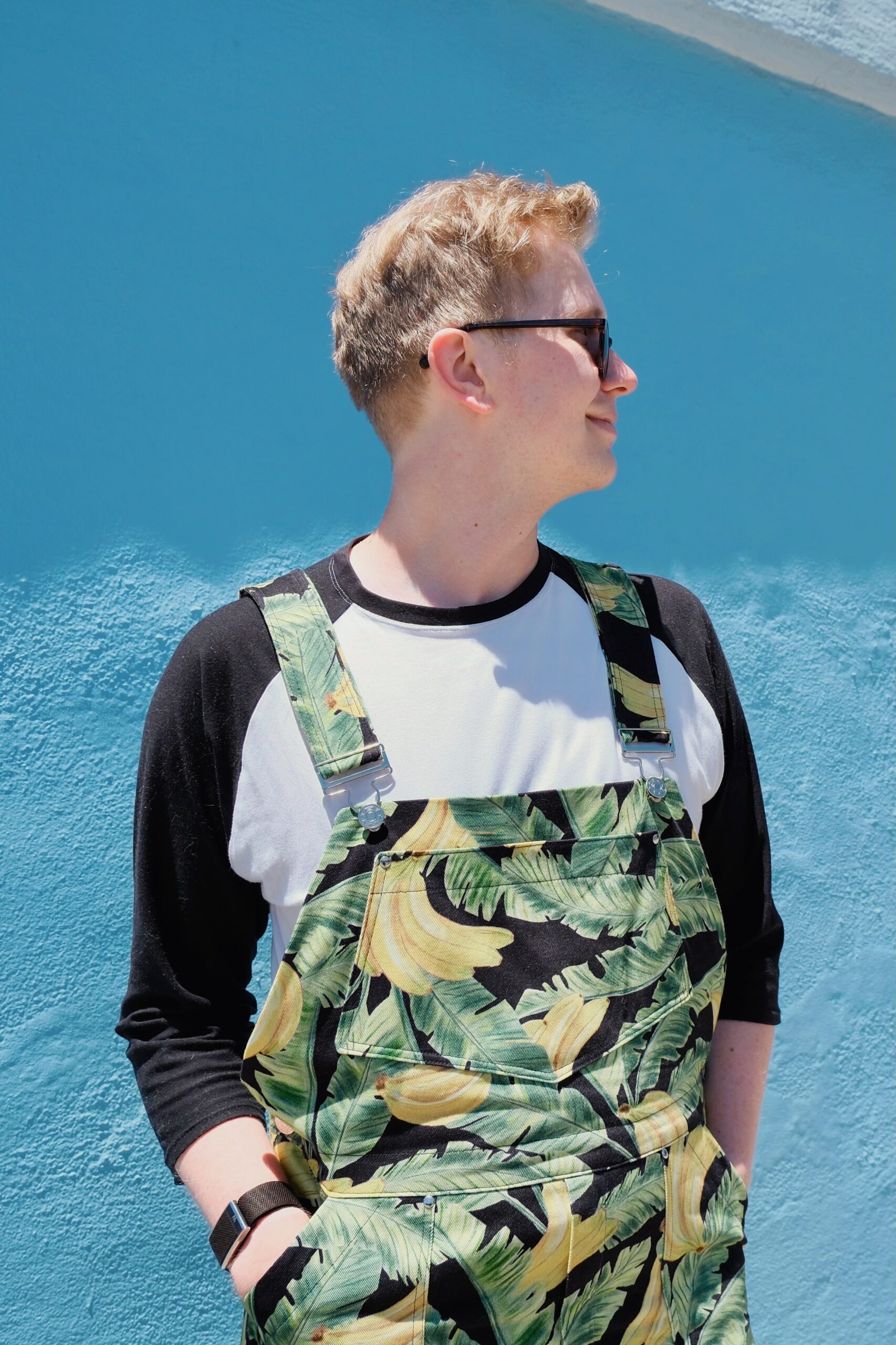
First, I want to start on a happy note and talk fabric, as I have some grievances with the pattern that need to be exorcised through the medium of this blog post 😅 This is a 9oz cotton denim twill, with an original Fabric Godmother print design of large bananas and banana leaves on a black background. This midweight denim has a soft, brushed hand and a firm structure. It is 160cm wide, which is always a bonus, and it is 100% cotton. I opted to wash and dry this denim twice, just to ensure any shrinkage was taken care of. It was lovely and stable to cut and sew, especially as the print motif design is non-directional, so I could be extra-economical with the pattern layout. I ordered 3.5m and made some lengthening adjustments to the dungaree pattern pieces, and yet I still had enough scraps left over to make myself a matching miniskirt! I am so happy with the quality of the denim and I am pretty confident that the twill weave will become even more comfortable as it gets broken in.
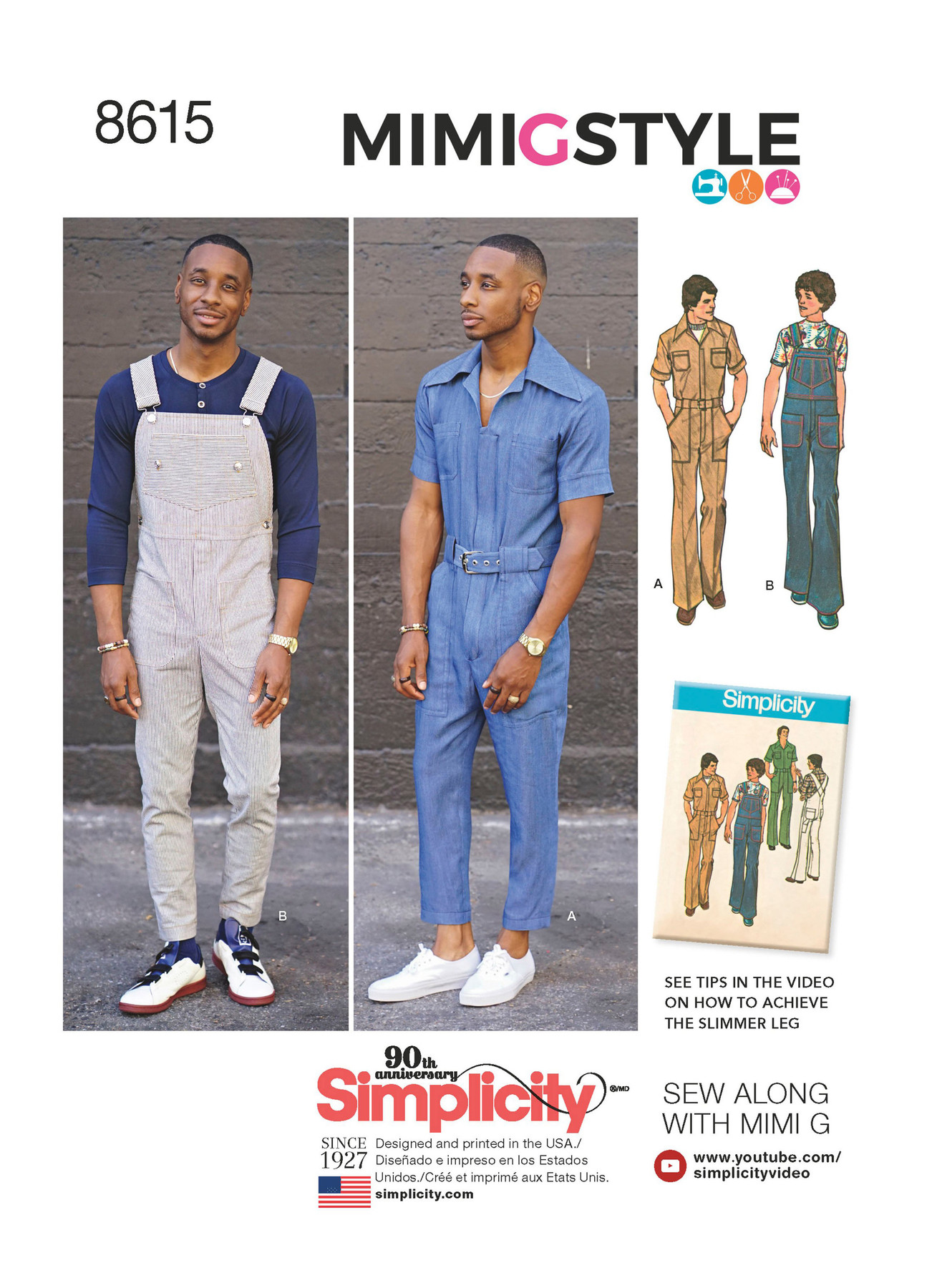
Simplicity 8615 has two views — view A is a boilersuit, whereas view B is a pair of dungarees, which was the version I (somewhat reluctantly) chose. View B has all the hallmarks of classic American denim overalls; there is a wide bib with a roomy patch pocket, side-button fastenings, plenty of topstitching, and crossover back straps that are fastened to the bib with metal dungaree buckles. The trouser portion has good-sized front and back patch pockets, as well as a fly front zip (ominous tone: oh, we will get into my thoughts on this shortly). This pattern is best suited for mid-to-heavyweight fabrics, such as denim, twill, chambray, and pinwale corduroy.
However, the reason for my slight reluctance to sew this particular pattern must be revealed. As this is a 1970s reprint, the trouser portion is designed as some seriously groovy, seriously wide-legged flares, which was not really the vibe Simon wanted. Although tapering the leg is a modification that can be easily made (the pattern envelope boasts that there is a video sewalong to achieve the slimmer leg), I am not particularly impressed that Simplicity has two large photographs showing the slimmer leg as the main image on the envelope, rather than the actual design-accurate illustrations, which are much smaller and are shunted off to one side. Also, this sewalong for achieving a slimmer leg can be summarised as “plonk a pair of slim leg jeans on top of the pattern pieces and trace around them”, which seems… meh at best. I was kinda expecting something focused on a mathematical drafting technique.
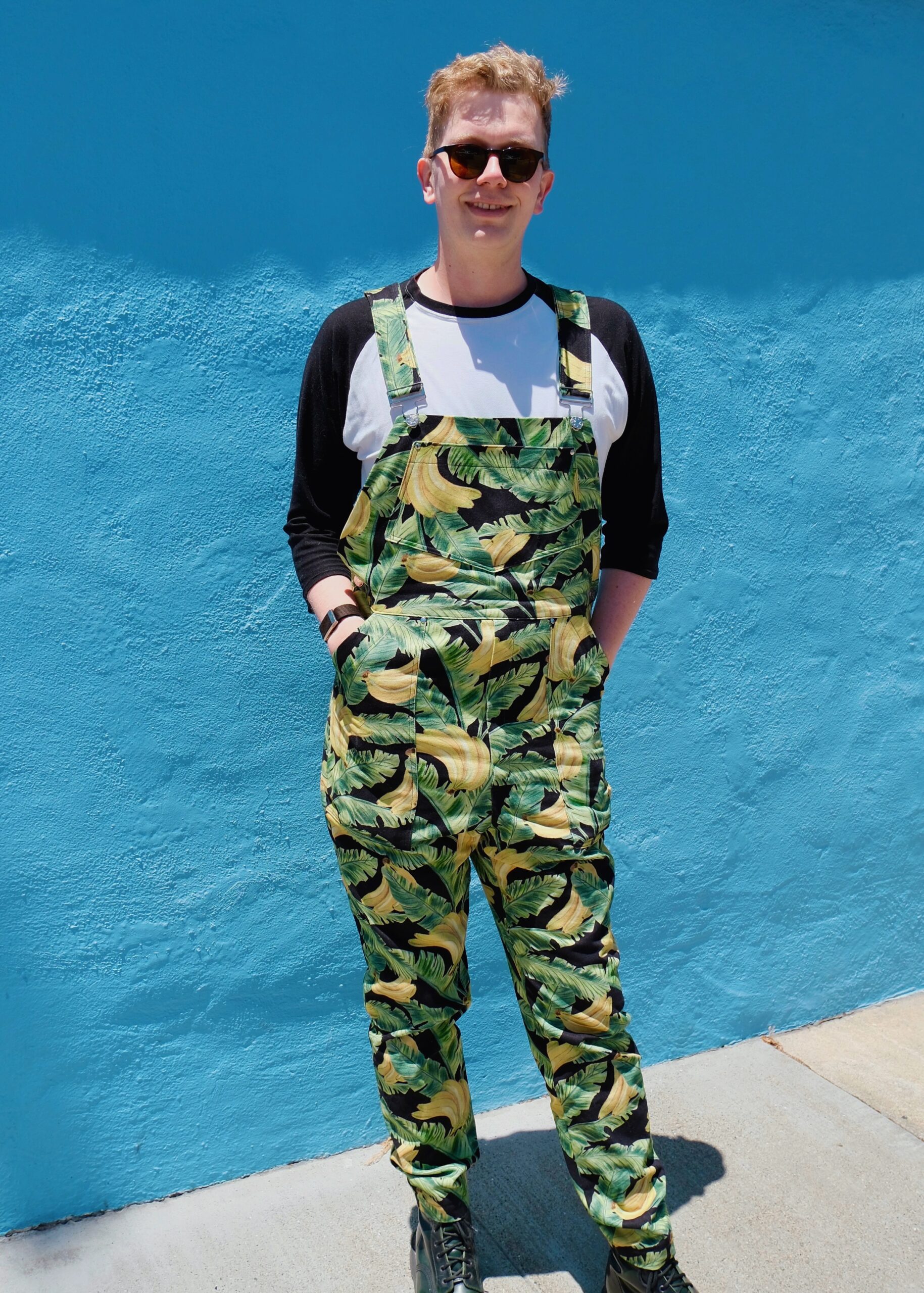
As I was already a bit unsure about this pattern, I decided to make a muslin to check the fit and the leg tapering technique. I made a size 40, skipping the installation of the zip and hardware, and just safety pinned the side closures. Clearly my ‘trace around a pair of slim leg jeans’ technique needed some work, as Simon couldn’t fit his foot through the bottom of the legs 😅 I went back to the pattern to make both style adjustments and general fit adjustments:
- Tapering from below the knee to the hem, this time ensuring the slimmer leg was still wide enough to fit Simon’s leg into it
- Added 1″ to the leg length below the knee
- Added 1 ½” to the rise
- Scooped out the back crotch curve slightly
- Switched the front patch pocket design to slash-opening patch pockets
- Added a 2″ deep hem
I am really glad I made these fitting changes, as the amount of ease and the general fit became pretty much spot-on for Simon. It is really important not to overfit, as dungarees need a relaxed fit so you stay comfortable when sitting, stretching up or bending over!
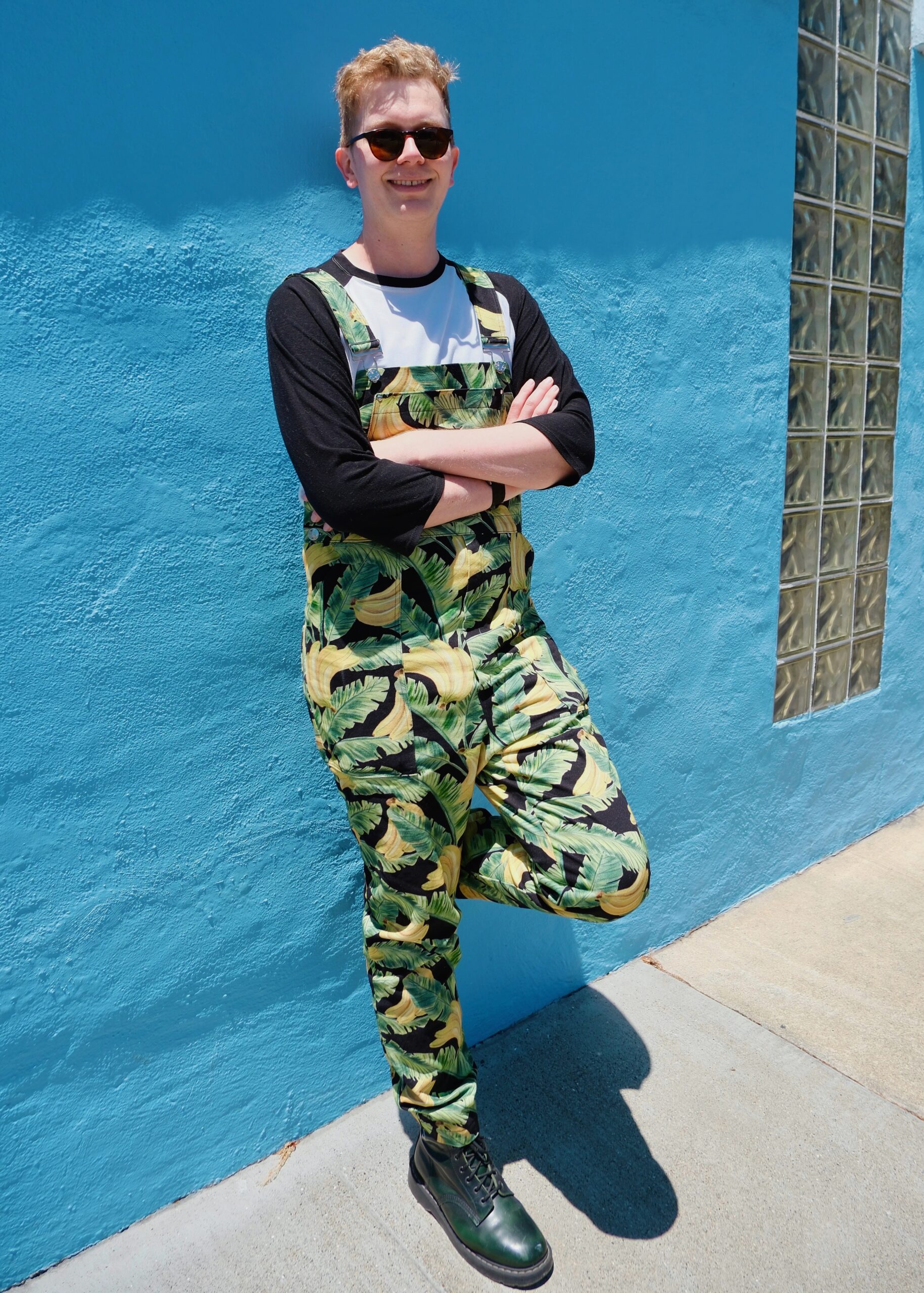
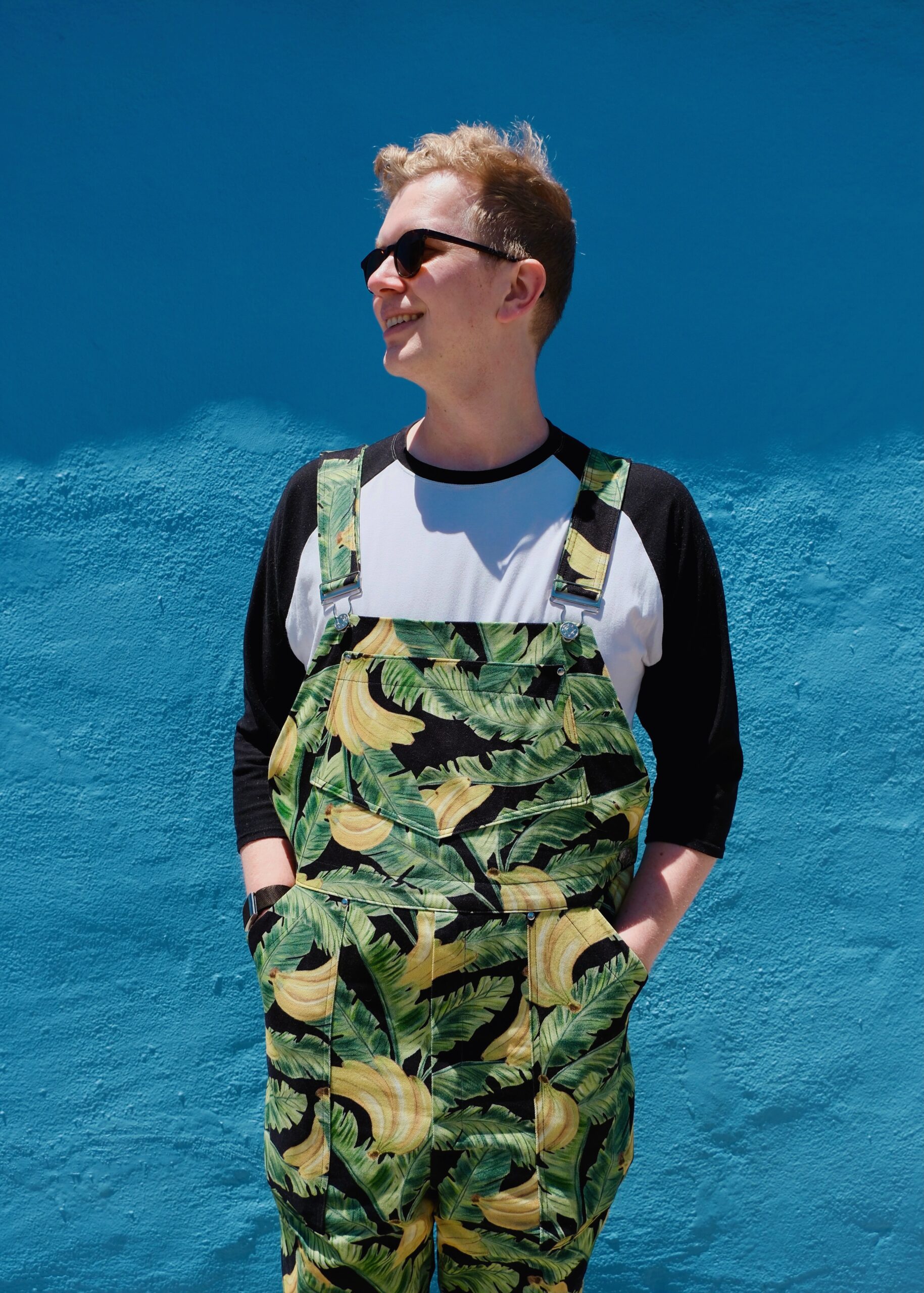
As for the instructions for constructing these dungarees, I wasn’t overly impressed here either and ended up doing my own thing at several points. The fly-front construction seems overly complicated — lots of fussing around with bias tape and basting different layers shut! I decided to skip this nonsense; I overlocked the raw edges and used the invaluable, G.O.A.T-status Closet Core Patterns guide to sewing a fly-front (just reversing the zip placements so it would be correct for a ‘male’ zip, even if I think that gendering trouser closures is all kinds of ridiculous). I am so impressed by how neatly this fly-front turned out! I am really glad I decided to follow the super-clear Closet Core Patterns instructions instead of getting muddled by the Simplicity instructions, as the fly isn’t even functional. Seriously. Spare yourself the heartache (and the money of buying bias tape and a 9″ zip!) and just make a faux-front fly. It just isn’t worth it.
There are some more curious choices in the pattern instructions. Nothing is interfaced, despite the recommendation to use not just heavyweight fabrics, but also medium-weight fabrics too. I could imagine if you were making these dungarees out of a medium-weight chambray, the lack of interfacing would cause you problems with the buttonholes and the strap attachments at the top of the bib. Although I was using a pretty solid denim, I ended up interfacing the upper edge of the bib and the side-fastening plackets. Another odd choice is to line some of the pattern pieces with self-fabric, which would make this unbearably bulky in a heavyweight denim. I lined the bib, the bib pocket and the back facing in quilting cotton to reduce bulk, trimming ⅛” from the edges to help the lining roll to the right side. I also amended the bib patch pocket to be just a big plain pocket, skipping the buttonholes and buttons. The view on the pattern just felt a little trite.
DETAILS!
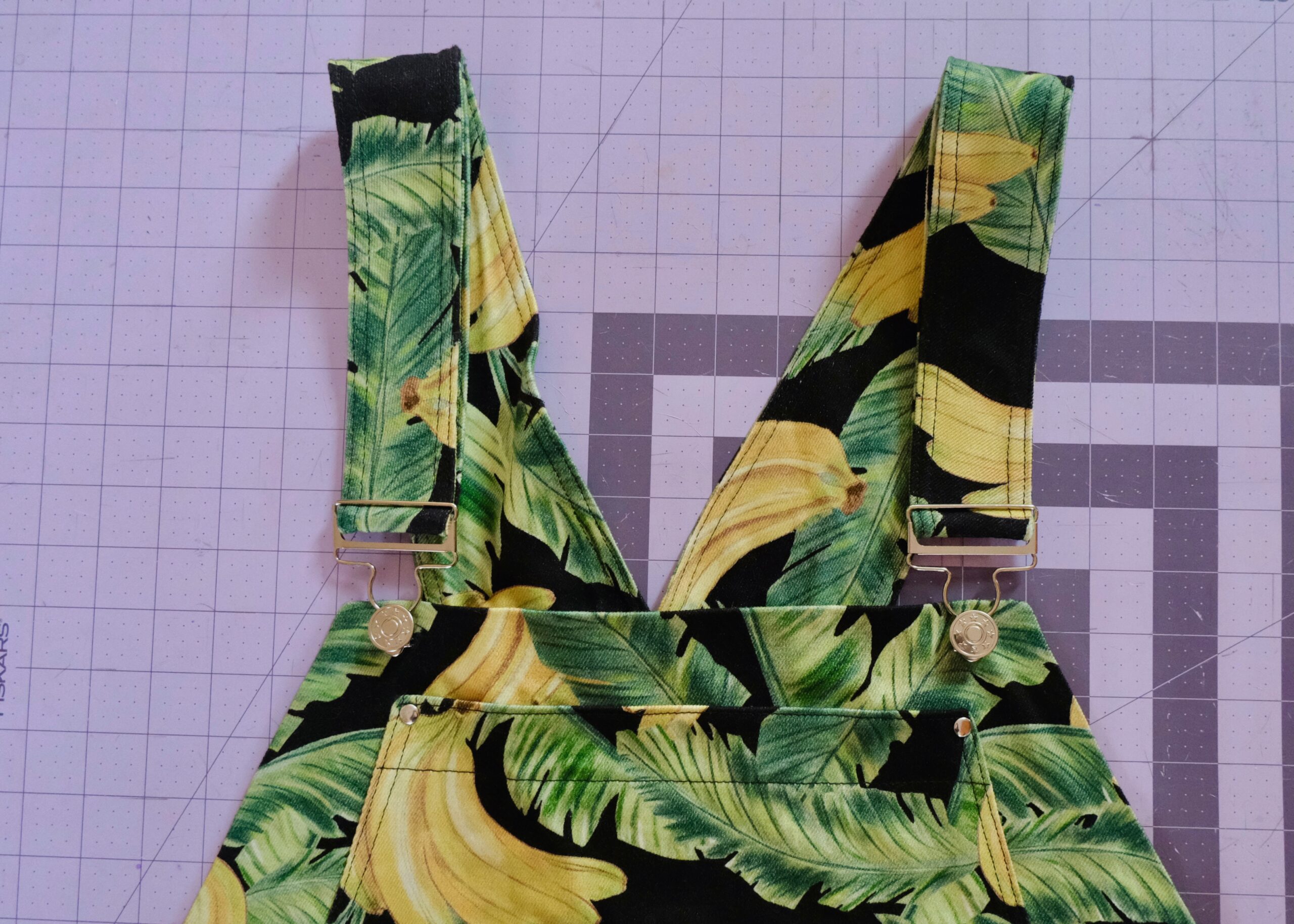
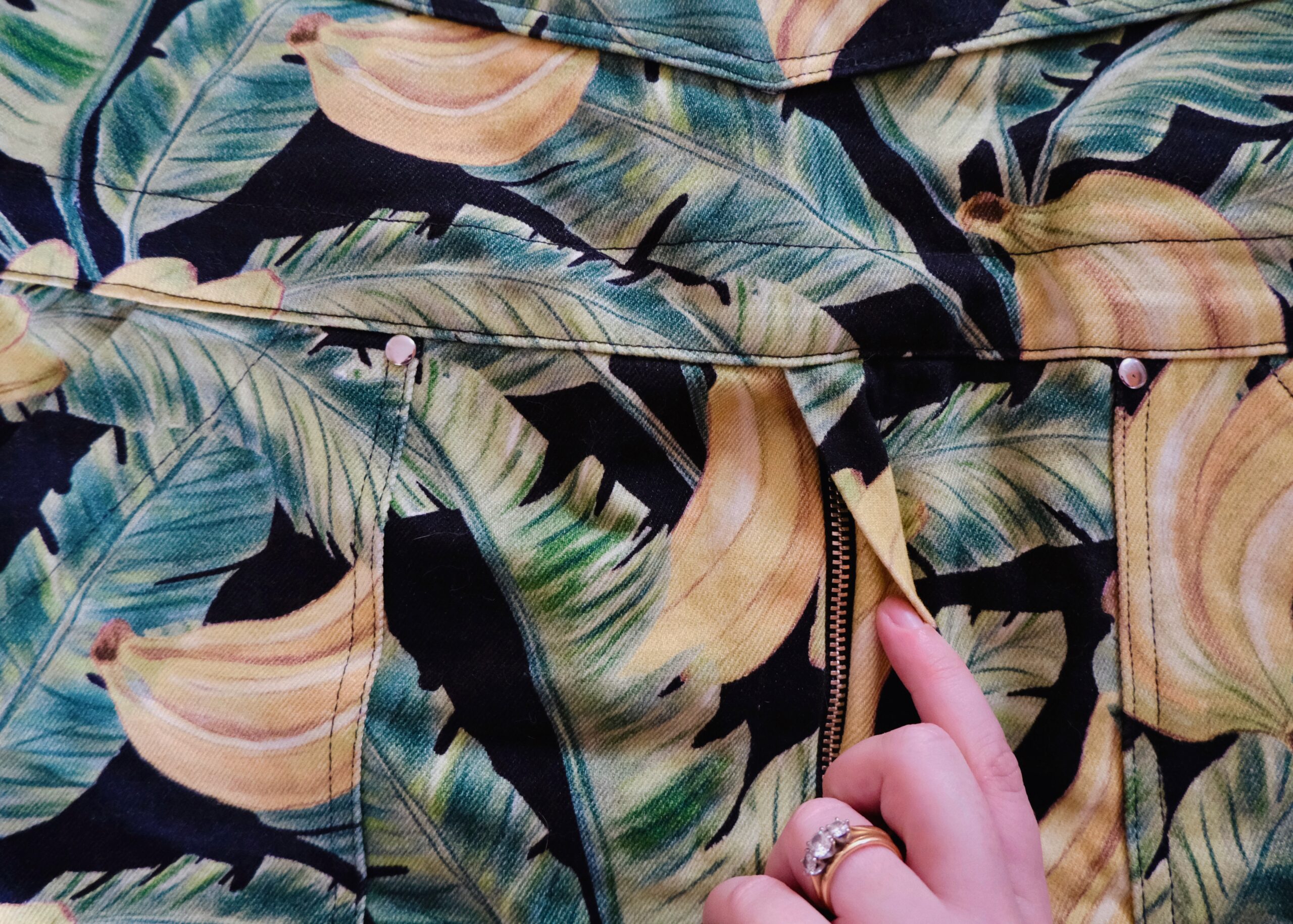
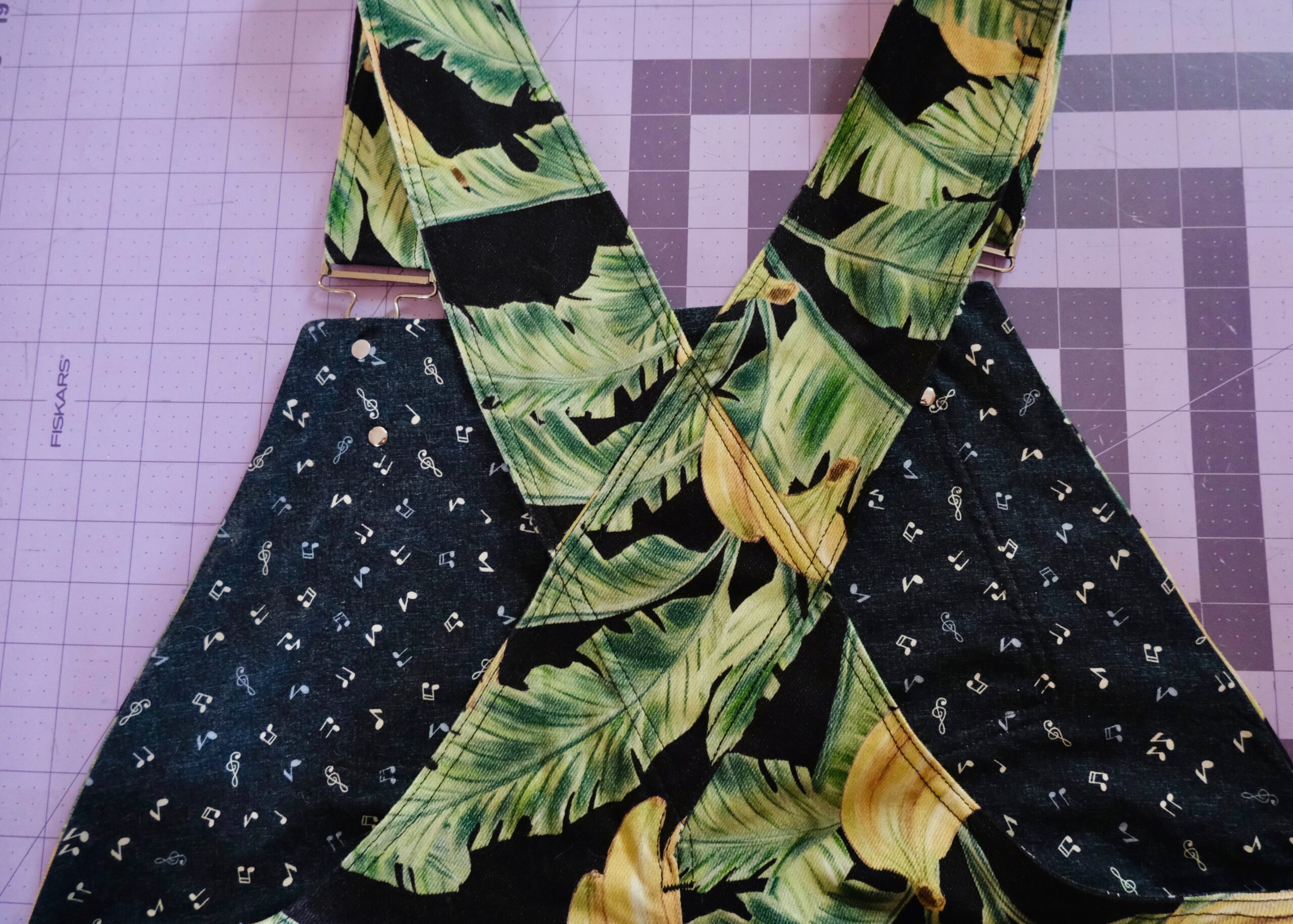
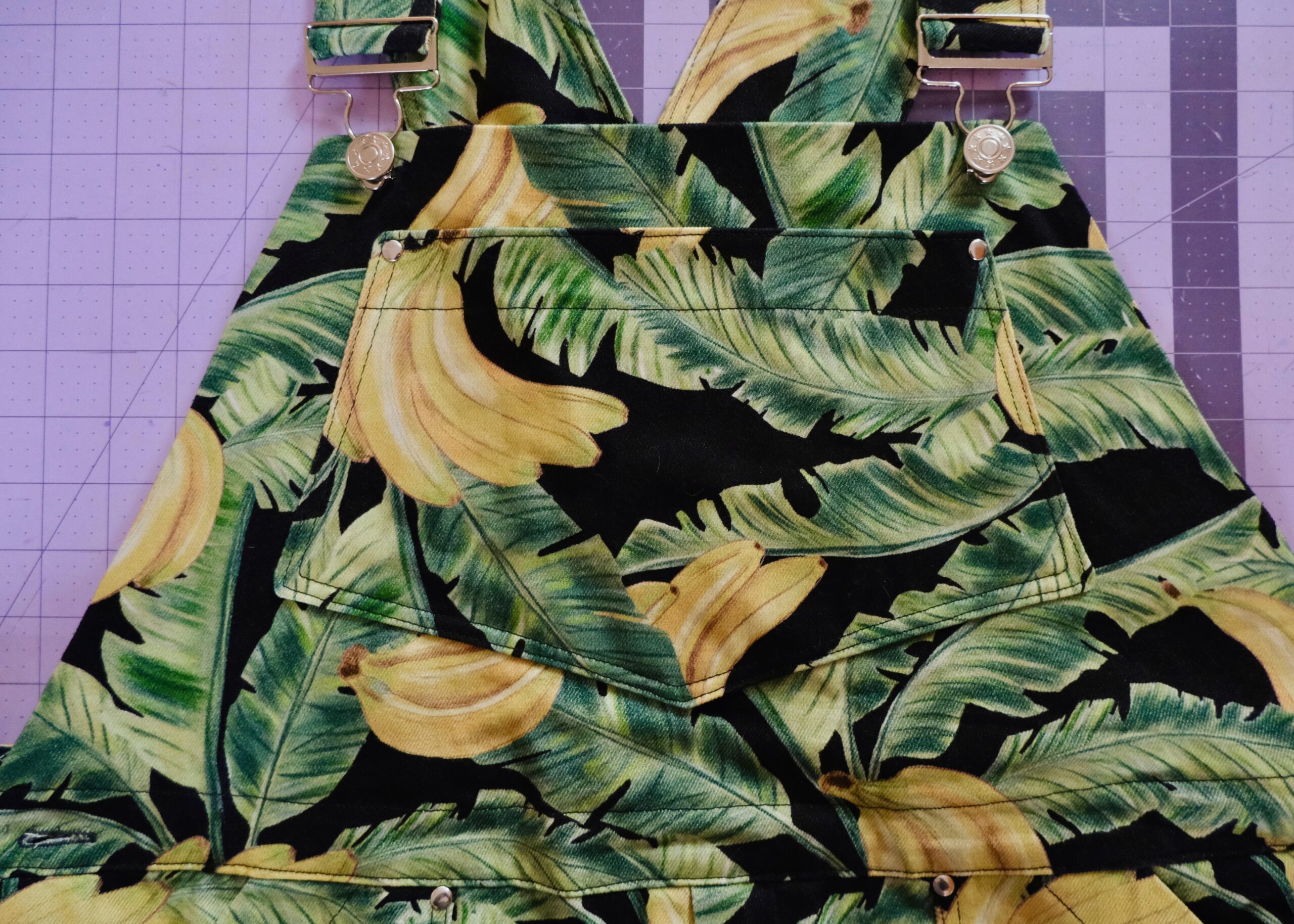
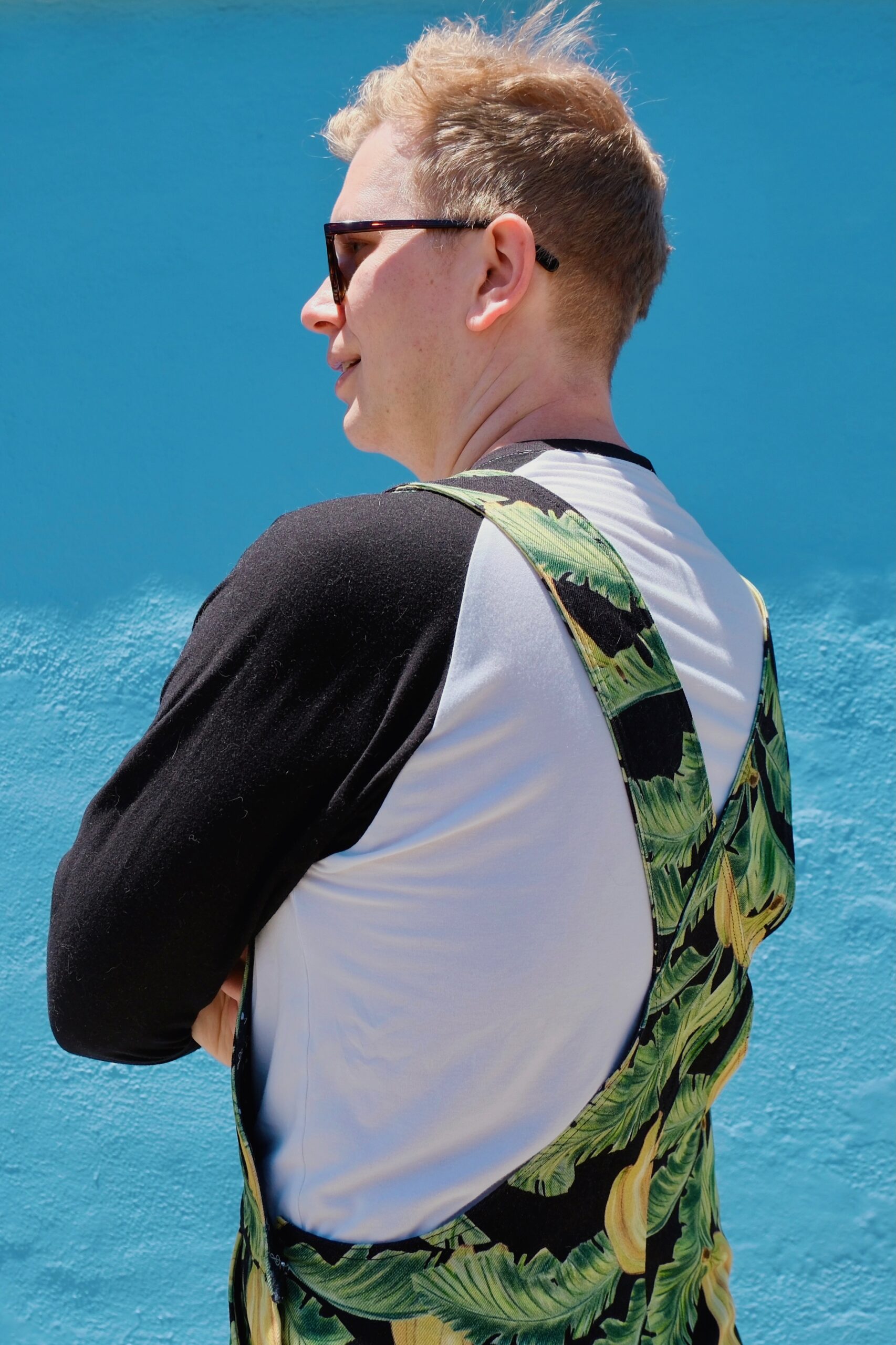
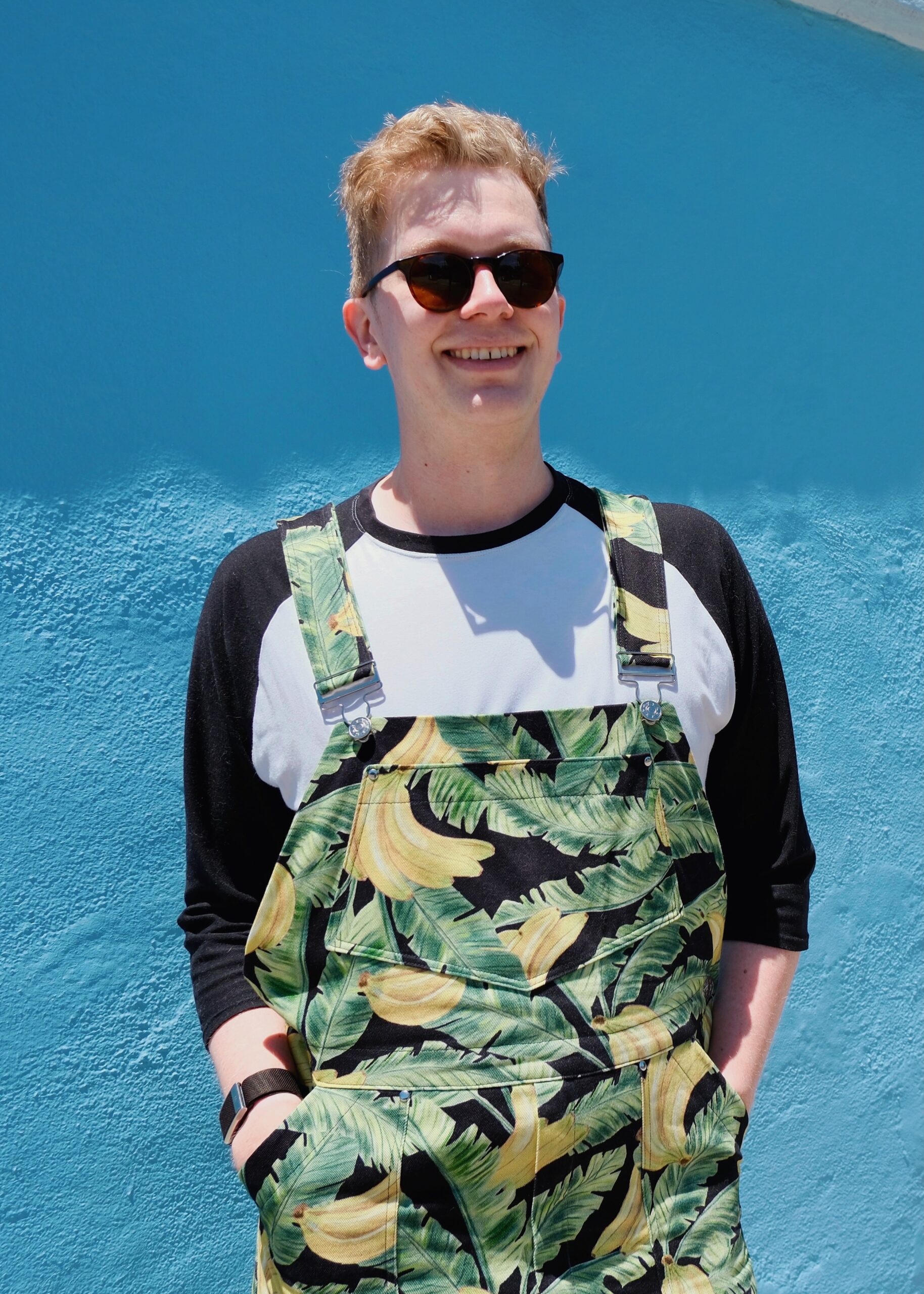
Despite my griping about the pattern and the instructions, I really do love these finished dungarees! The actual sewing process was quite fun; it is always enjoyable to sew a nice, stable denim. It flowed quite easily — I switched between a 100-weight thread for construction and a 70-weight thread for top stitching, but used a jeans needle for everything. There were several bulky areas that I needed to hammer to lay flat and I also added some rivets to provide strength in potentially weak spots. I am really getting into sewing more denim and complex projects this year — I have got plans to make another pair of dungarees for myself and make jeans for the first time! I think if I were to make this pattern again for Simon, I would definitely skip the fly and sew a faux-fly. I would also amend the side openings to align with the bottom edge of the pocket bag I drafted; at the moment, this clipped area is a little weak and it would be good to use another rivet here to provide strength to both the clipped corner and the edge of the pocket bag. I would probably need to make an additional buttonhole and button on each placket though! I am on the fence about recommending this pattern; I had numerous quibbles with the pattern pieces and the instructions, but I really do love how good they look when they are done, especially when styled with this Friday Pattern Company Old Coast Raglan Tee (an amazing free/pay what you can pattern). Argh!
I guess all I can do is call it in the style of the World Cup: Banana Dungarees – 1, Simplicity Instructions – 0.
Simplicity 8615 Vintage Men’s Jumpsuit and Overalls
Size 34 – 52
Chest: 34″- 52″
Waist: 28″- 48″
Hip (Seat): 35″- 53″